
Eagle Home Appraisal Snohomish
Probate appraisals in Snohomish.
For a personal representative, a house is one part of a larger responsibility. Confirm the date, the intended use and who needs the report.
Snohomish, Washington
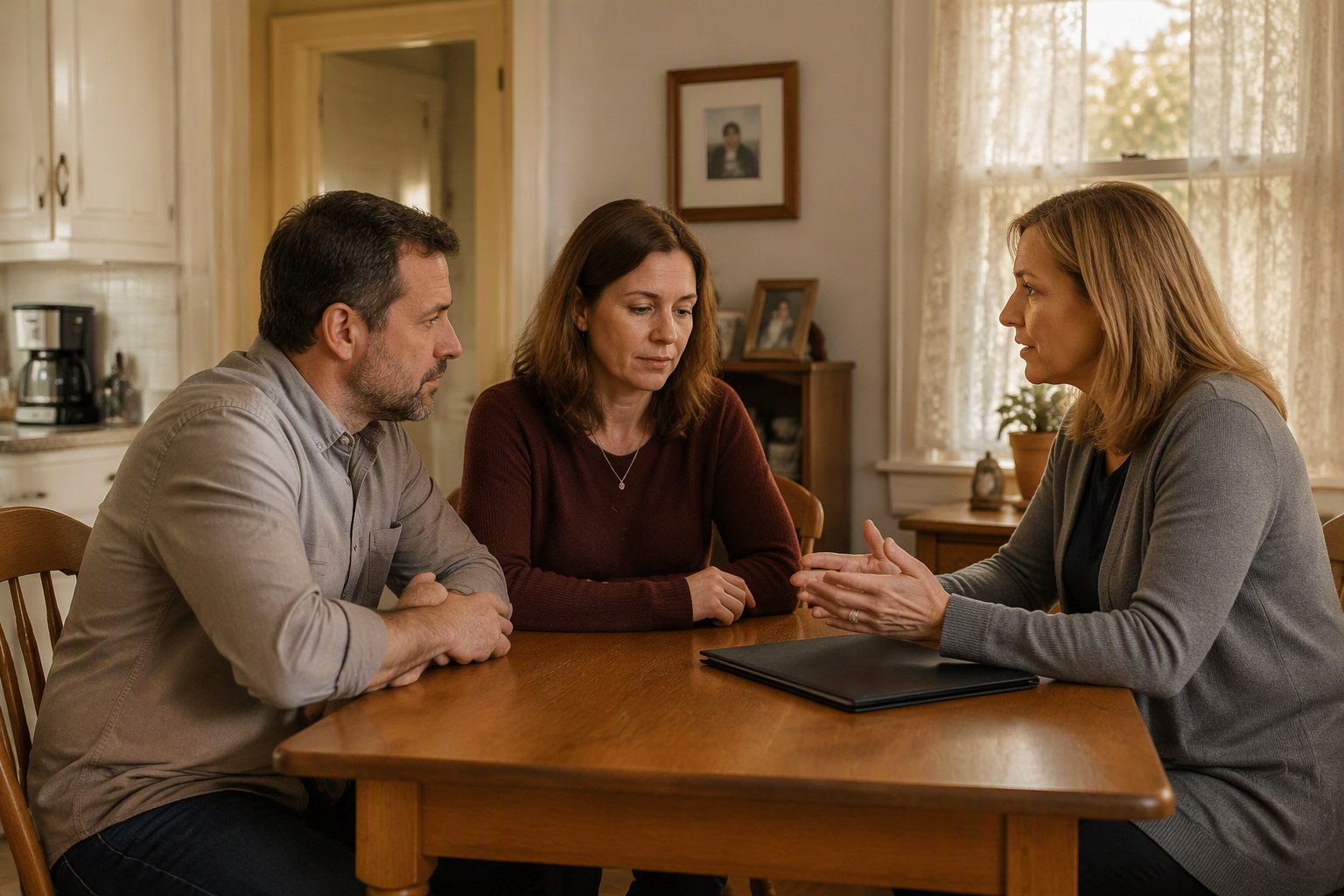
Washington asks the personal representative for a date-of-death value; an appraisal is one way to support it.
If you are the personal representative of an estate that includes a Snohomish house, an early task is an inventory that puts a value on it. Below: what Washington law asks for, where the Snohomish County court fits, and when an appraisal is optional or required. Settle the purpose and the date with the estate's attorney, then share the address with us.
Request a probate appraisal quote · Call (425) 287-5343
Does Washington probate require a home appraisal?
Not as a general rule. Within three months after appointment, unless the court allows longer, every personal representative must prepare and verify an inventory and appraisement of the estate's property. Real property is listed by legal description, and the personal representative determines the fair net value of each item as of the date of death, after subtracting liens and other secured debts (RCW 11.44.015). The statute gives that job to the personal representative; it does not order a professional appraisal.
What to gather before asking for a quote
- Letters and the date of appointment
- The three-month inventory period runs from appointment
- The date the owner died
- Tells us which day the value describes
- Legal description or recorded deed
- The inventory lists real property by legal description; Snohomish County Recording records deeds
- Whether there are nonintervention powers, and any planned sale
- Shows whether the court-confirmed sale rule may apply
- Changes to the house since the death
- Separates its condition then from work done since
- Access, and who holds the keys
- Lets the inspection and delivery be scheduled
A probate valuation in four steps
- Start by fixing the scope. Give us the address, the date of death or other valuation date, the people who will use the report and your timeline; you get a written scope, fee and delivery estimate before anything else.
- See the house and collect the records. Access is arranged through the personal representative or the attorney, along with any records of the home's condition at the date of death.
- Analyze sales for that date. The appraiser works through sales and market conditions around the date of death and documents why they support the value.
- Check the report against the attorney's instructions. Make sure it is dated to the date of death (or the date the attorney chose), names the estate's intended users and lists its assumptions; send corrections of fact to the appraiser.
Reports are prepared under USPAP, which does not bind a court, an agency or an heir to accept a value.
Fee and timing in a probate
Ask for a written scope, fee and delivery estimate. Size, complexity, a past effective date and your deadline affect the fee and schedule. If a court-confirmed private sale is planned, keep the one-year window for the appraisal in mind. Inherited homes that skip probate are covered on the estate appraisals page, and the heirs' basis on the IRS step-up appraisals page.
What the probate value turns on
The date
The inventory looks to the day of death. A later sale or a buyout between heirs may also call for a current value.
Its condition at the death
If the house has been emptied or repaired since the death, the report still describes it as it was; photos and receipts help separate then from now.
The readers
The personal representative, the estate's attorney, heirs who may request the inventory and, if a return is required, the Department of Revenue. Name the intended users first.
Probate in Snohomish County
The superior court of every Washington county hears probate (RCW 11.96A.040). In Snohomish County, probate filings go through the Superior Court Clerk, whose probate page notes that probate is not always necessary but may be required in some situations (Probate and Wills). Under the court's local rule SCLSPR 98.04, uncontested probate matters that need no notice, or where notice has been waived, may be heard ex parte; matters that require notice go on the Guardianship/Probate calendar (Local Court Rules).
Where an asset's value is open to reasonable doubt, the personal representative may hire a qualified and disinterested person to help determine its fair market value as of the date of death, and the court can later review whether that person's fee was reasonable (RCW 11.44.070). For a house, an independent appraisal is one way to provide that support.
Who can see the value, and challenge it
The inventory and appraisement may, but need not, be filed with the court. If an heir, a legatee or devisee, an unpaid creditor who has filed a claim, certain nonprobate beneficiaries or the Department of Revenue asks in writing, the personal representative must provide a copy within ten days (RCW 11.44.015(2)). Any party in interest may challenge the inventory at any stage of the probate (RCW 11.44.035). A value with documented support is easier to explain if someone asks.
When an appraisal is required: a court-confirmed private sale
A personal representative who has been granted nonintervention powers (RCW 11.68.011) can sell the decedent's real property without a court order (RCW 11.68.090). Without them, estate property is sold under a court order (RCW 11.56.010), and a private sale of real estate cannot be confirmed unless the offer is at least 90% of the appraised value and the property was appraised within one year before the sale. If it was not, or if the court finds the appraisal too high or too low, appraisers may be appointed (RCW 11.56.090). Ask the estate's attorney which situation applies to your estate.
A Washington note: community property at death
If the decedent was married or in a state registered domestic partnership, part of the home may already belong to the survivor as community property. Neither spouse may leave more than half of the community property by will (RCW 26.16.030), and when there is no will, the surviving spouse or domestic partner receives all of the decedent's share of the net community estate (RCW 11.04.015).
A surviving spouse or registered domestic partner, or dependent children, may also petition for an award under Chapter 11.54 RCW; its basic amount is the greater of the date-of-death value of property that was exempt from creditors, such as a homestead, or a statutory floor (RCW 11.54.020). Title and inventory questions belong to the estate's attorney; the appraisal addresses the property and date the attorney identifies.
Taxes: confirm with the estate's adviser
Washington has no inheritance tax, and there is no federal inheritance tax. If the estate needs a Washington estate tax return, the Department of Revenue says the probate inventory and appraisement is not valid supporting documentation, and it calls for a certified appraisal for real estate that was not sold (DOR estate tax FAQ). For the heirs, federal basis is generally the date-of-death fair market value (IRS: Gifts and inheritances). The Washington thresholds by date of death are on our estate appraisals page; the attorney or tax adviser should confirm whether a return is needed and which date to value.
Your next step
Share the Snohomish address and the date of death, say who is going to rely on the report, and we will map out the next steps.
Request a probate appraisal quote · Call (425) 287-5343
Written for Eagle Home Appraisal Snohomish, using the Washington statutes and Snohomish County pages linked above. Nothing here values a particular property, and none of it is legal or tax advice.
Eagle Home Appraisal Snohomish